

A call to come home
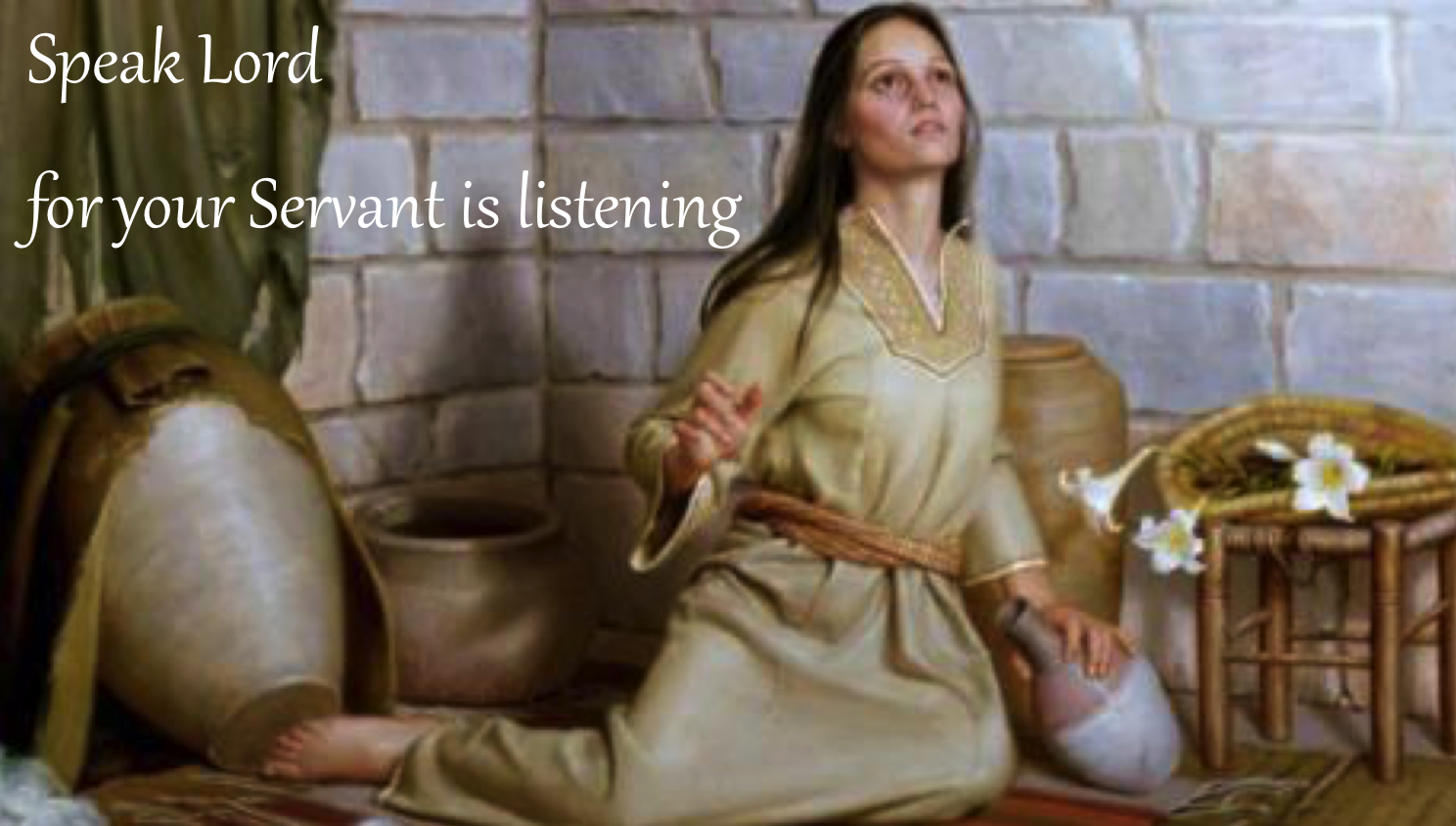
A meditation of the joyful mysteries shows many themes, one of which is acknowledging Jesus as the Christ. Beginning with the first joyful mystery the Blessed Mother receives the long-awaited angel Gabriel who bears that ancient message that the Messiah is coming, and through her no less. He proclaims, “Hail full of grace.” Not merely recognizing her but also confessing her holiness. A salutation by Gabriel that is given to Mary before she has been overshadowed. Letting her know that the Father had created her that way because that is what would be necessary to provide the holiest dwelling place for the infant Jesus, the infant Messiah. No other mere prophet required such a holy dwelling in preparation for his arrival. And that is because this is no mere prophet and no mere king. But He is the King of kings and Lord of lords. Gabriel goes on further and says, “Behold you will conceive in your womb a child and you should call his name Jesus. He will be great and will be called the son of the most high; and the Lord God will give to him the throne of his father David and he will rain over the house of Jacob forever; And of his kingdom there will be no end”. And further he states, “The Holy Spirit will come upon you and the power of the most high will overshadow you; therefore the child to be born is to be called Holy, the Son of God.” And Mary’s acceptance of the angel’s word, that to her that the Christ will be born, begins with her accepting response, ”Behold I am the handmaid of the Lord, let it be done to me according to the word”. She thereby gives the first acknowledgment that Jesus is the Christ, the Messiah. Proof that Mary has acknowledged not just the reception of a child, not just obedience to God’s will, but she acknowledges that this child within her is her Savior and the long promised Anointed One foretold by the prophets.
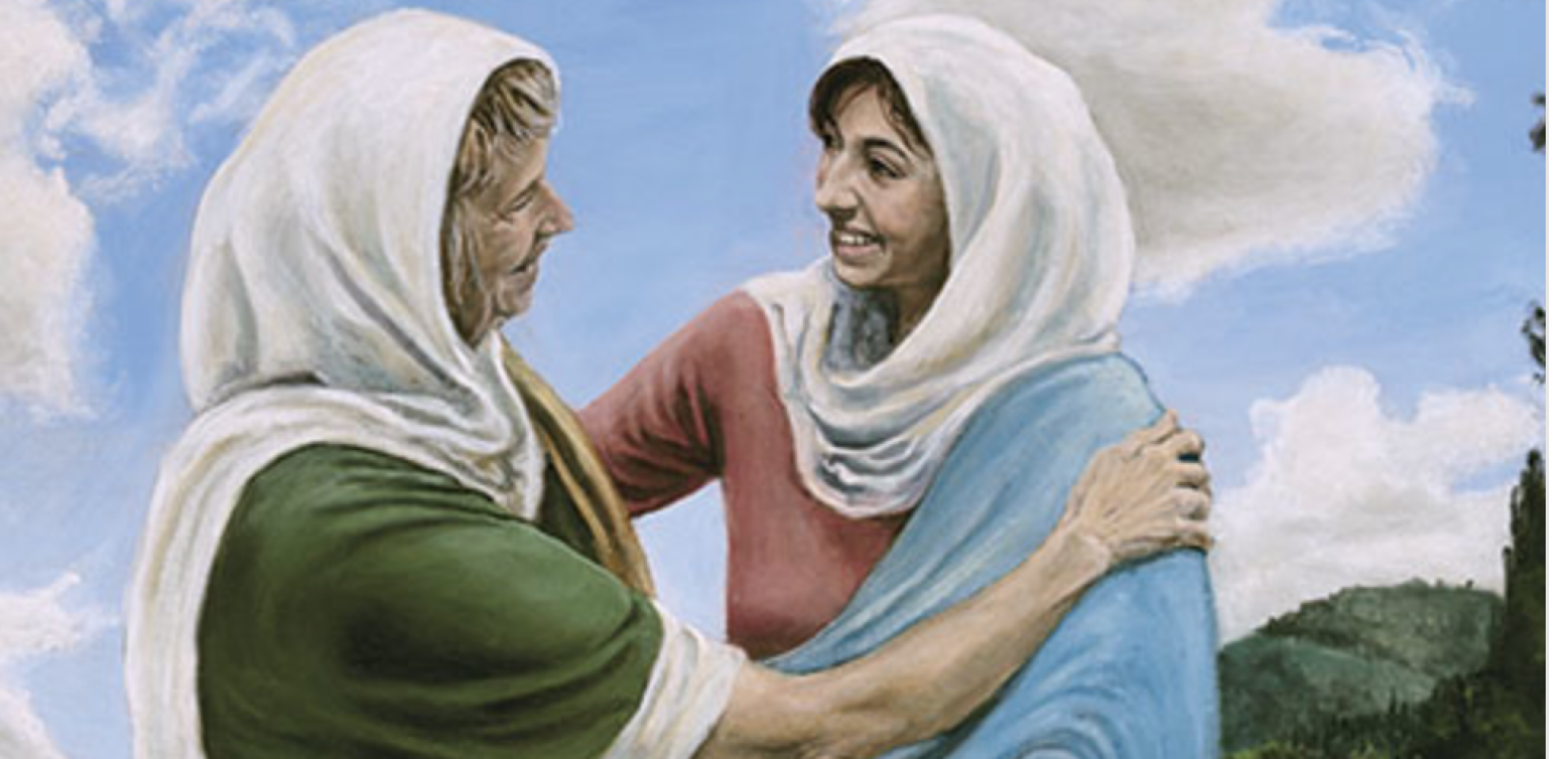
In the second mystery this acknowledgment is further affirmed when both Saint John the Baptist and Saint Elizabeth are moved to truth by the infant in utero Jesus, accepting and stating that the unborn child is the foretold prescribed anointed fulfillment of the Old Testament. Moved by the Holy Spirit, in unity with the unborn St. John, Elizabeth, on hearing the voice of Mary, exclaims in a loud cry, “Blessed are you among women and blessed is the fruit of your womb! And why is this granted me, that the mother of my Lord should come to me?” In this first statement from Elizabeth you see that she recognizes Jesus as Lord and Mary as Mother of God. To see this in any lower way would be to humanize the works of God the Father and to minimize His omnipotence. Elizabeth would go on to explain how she came to that conclusion, “For behold, when the voice of your greeting came to my ears, the baby in my womb leapt for joy. And blessed is she who believed that there would be a fulfillment of what was spoken to her from the Lord”. This last sentence is not merely a reference to what Gabriel had spoken to Mary, but what the Lord had spoken to Mary throughout her entire life. Every word of the Lord handed down to Mary in the Torah. Every promise as told to the prophets. The Father made the perfect vessel, so Elizabeth would have true Joy in knowing her Savior had arrived.
In the third mystery, the shepherds also come to acknowledge the king of the universe; the Lord, the Christ, this infant child who is the Messiah, the long-awaited one. It was to the shepherds the angel said, “Be not afraid, for behold, I bring you good news of great joy which will come to all the people; for to us is born this day in the city of David a Savior, who is Christ (the Messiah, my emphasis ) the Lord and this will be a sign for you: you will find a babe wrapped in swaddling clothe and lying in a manger. And suddenly there was with the angel a multitude of the heavenly host praising God and saying, “Glory to God in the highest and on earth peace among men with whom he is pleased.” The angel has spelled it out very clearly for the shepherds, leaving no doubt to whom they will encounter and they described very specifically how the scene would look so they knew exactly who the Messiah was. It was with this insight and direction that the shepherds responded, “let us go over to Bethlehem and see this thing that has happened, what the Lord has made known to us. And after seeing the child, “they left glorifying and praising God for all they had seen and heard, as it had been told to them.” Their response is pure Joy and simple acceptance, an act of Faith.

But God was not through making the coming of His son known. Not only did he speak to the simple and God fearing, but to the wise. However, not the wise of Israel, but those from the East who were searching the Heavens. Who with open hearts found the inspiration to voyage through the deserts to follow a star. Knowing the importance of Jerusalem, perhaps the wise men thought they would find others headed to worship the new born king. Instead, they find ambivalence, as they themselves would become the messengers to Israel of the new born king. And Herod maybe wanting to impress the wise men, or just simply use the them, provides them the missing information that they lack in order that they may complete their mission. Clearly, the arrival of the wise men in Jerusalem created a buzz of curiosity. Yet even when Herod knew the reason, his heart was not filled with Joy but with jealousy. The people of Jerusalem were not filled with Joy, but were troubled as their hearts no longer had Hope or Trust in God’s covenant. Instead the hearts of the people of Jerusalem belonged to the world, to Caesar, to Herod. Should the very people who gave guidance to the wise men not have been looking for the promised coming as well? Why were their hearts not awakened at hearing the reason for the wise men’s arrival and mission? What made the wise men wise was not simply their knowledge of science, astronomy, and perhaps cosmology; it was that their eyes, hearts, and minds were not closed off from the metaphysical world. Instead this wisdom allowed them to recognize the Creator of the universe. The one that had brought the Israelites out of Egypt was now fulfilling His promised covenant. And through it they found the Joy and Hope the new born child had brought into the world for all people. A wisdom that gave them the humility to recognize something greater than themselves or their own desires and bow and worship this new born babe.
Arriving at the fourth joyful mystery we find the prophet Simeon with arms raised in praise blessing God saying, “Lord, now let your servant depart in peace according to your word; for my eyes have seen the salvation which you have prepared in the presence of all people, a light for revelation to the Gentiles, and for glory to your people Israel”. The patient prophet of fortitude, who has seen people come and go, both to and from the temple for years, finally receives the affirmation of the Holy Spirit. And by the Spirits grace, and with eyes of faith, Simeon witnesses about Jesus, proclaiming that the fulfillment of the promise has arrived. And with the promise, Joy.
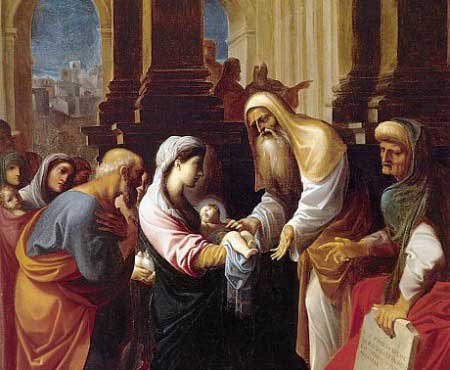
And the prophetess Anna, witnessing this long-awaited Presentation, confirms Simeon’s invocation through the following affirming actions, “And coming up at that very hour she gave thanks to God, and spoke with him to all who were looking for the redemption of Jerusalem.” Both of these servants of God spent their entire lives in the temple awaiting. And not just for anyone, but specifically for the fulfillment of the messianic promise, the Savior, the Christ, who was and is Jesus. Again acknowledgment of the MESSIAH.
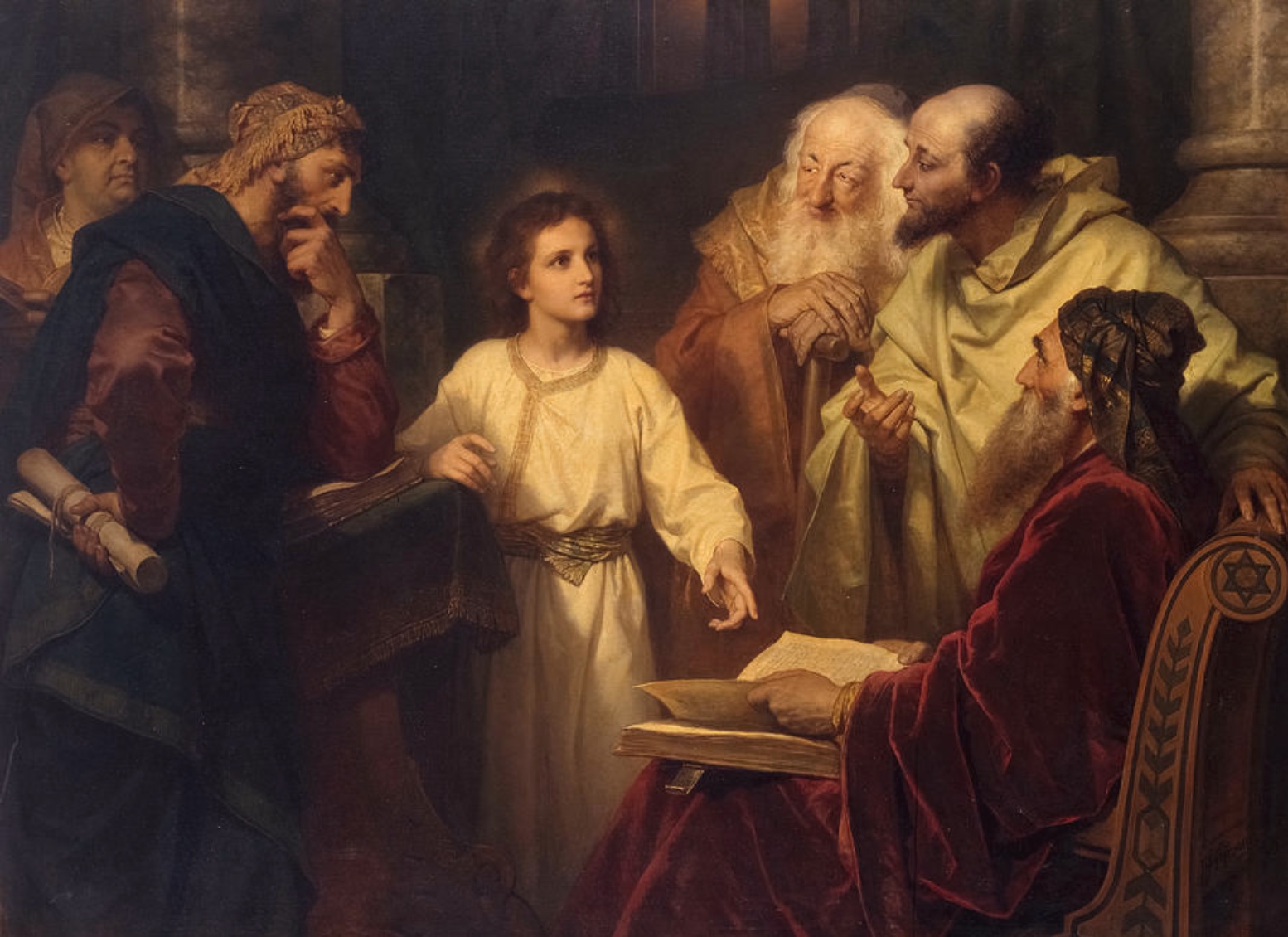
Yet, it is when we reach the fifth mystery where we see a departing of this theme of full recognition of the Messiah. In the gospel of Luke we see that, “after three days He (Jesus) was found in the temple sitting among the teachers, listening to them and asking them questions and all who heard Him were amazed at His understanding and His answers.” While in this final mystery we see the joy of Mary and Joseph finding again the child Jesus, what we fail to see is the awareness of the teachers and of the church, of that time period, any realization that the child Jesus is the Messiah. Despite being with, talking to, listening to, and spending three days with in the temple, they miss the fulfillment of the promise and the very one that they have longed to see, the anointed one. They just can’t seem to see beyond the human Jesus and to see the promised Christ as well. And this failure brought on by the closed eyes of the heart continues to this very day as the Jewish people deny their own messianic history, the fulfilled promise of God’s covenant with them. They continue to look for joy within the material world. To recreate their own promised land, despite knowing that God’s kingdom is not of the world, for the world belongs to the devil, as taught by Job. It will only be when the Jewish people finally recognize their messianic history that true Joy will be brought to them and all the world.
Meanwhile, the early Christian Church would come to recognize in hindsight the resurrection joy hidden in the 5th mystery, linking the three days in the temple to the three days in the tomb. And it is because the Jewish people fail to welcome the Christ and bring about His second coming, that Christ has left His very self in the Eucharist to the Church. Unfortunately, there exists within this Church many who fail to accept this real presence. People who call themselves Christians yet struggle to give one hour on Sunday to the Lord. Unable to glorify Him for a single hour and to give so little a portion of themselves, all the while He places ALL of HIMSELF; body, blood, soul, and divinity, into the bread of Life and then gives ALL of this ALL to each and every Catholic who comes to receive Him. This lack of appreciation, acceptance, and faith in Christ in the Holy Eucharist deprives the Church of receiving the fullness of Joy promised in the 5th mystery. It deprives all the world of greater Joy and intimacy with Christ.
And finally it must be acknowledged that the lack of obedience found in our protestant brothers and sisters, whose rebellion against the church leaves them absent of the joy of this fifth mystery, causes them not only miss the Truth of the real presence of the Blessed Sacrament, but to often speak against Him, because they fail to recognize the Apostolic authority of the Church created by Jesus Christ. The rejection of this grace, that exists for all who bring themselves in faithful communion to the Church, also stymies the fullness of Joy promised in the 5th mystery.
These threefold examples of failure to see Jesus, especially when he is right in front of you, is what continues in holding back the Joy of seeing Jesus in His second coming. A coming also foreshadowed in the 5th mystery. Mary recognized her Savior in the Words of an Angel; Elizabeth and John recognized him in utero; the wise men, the shepherds, Simeon, and Anne all recognized their Savior though still an infant. Yet after seeing, hearing, and talking to the boy Jesus for THREE straight days, the rabbis of the temple failed to recognize the Savior for whom they had longed. Akin to the failure of all Jerusalem not to follow the wise men when they came seeking their King.

We can have a blindness when our preconceived notions override reality. In the same way science proves over and again that the child in the womb is a distinct human being, our own wants and desires for our own truth make us blind to the reality, the REAL TRUTH, that is right in front of our eyes. See Jesus for who He was, is, and will be and see the unborn for who they are – a person like you and me.
 The Louisville Helpers of God's Precious Infants